
Country Kenya
From Crate to Wrapped Bale: A Kiambu Farm Delivery Day
A diesel silage baler wrapper arrived at a Kiambu farm in its crate. By late afternoon, the crew had tested it on the farm's chopped forage and completed the full bale-and-wrap cycle.
More articles
-
 Charles’s 3.8T Chaff Cutter: From an Office Visit to On Its Way to Kenya16 October 2026 · Customer Stories · Kenya
-
 A Son’s Gift: A 5.8 t/h Chaff Cutter for His Father’s Farm in China15 October 2026 · Customer Stories · China
-
 Duncan’s Chaff Cutter: 10 t/h, Diesel, and Already Cutting14 October 2026 · Customer Stories · Kenya
Get a quotation
Tell us what you process, your daily volume and the power at your site. We reply with a suitable machine, its specification and a quotation.
Richiedi un preventivo Scrivici su WhatsApp 2000 Plaza, Mombasa Road, Nairobi
Monday to Friday, 10am to 5pm
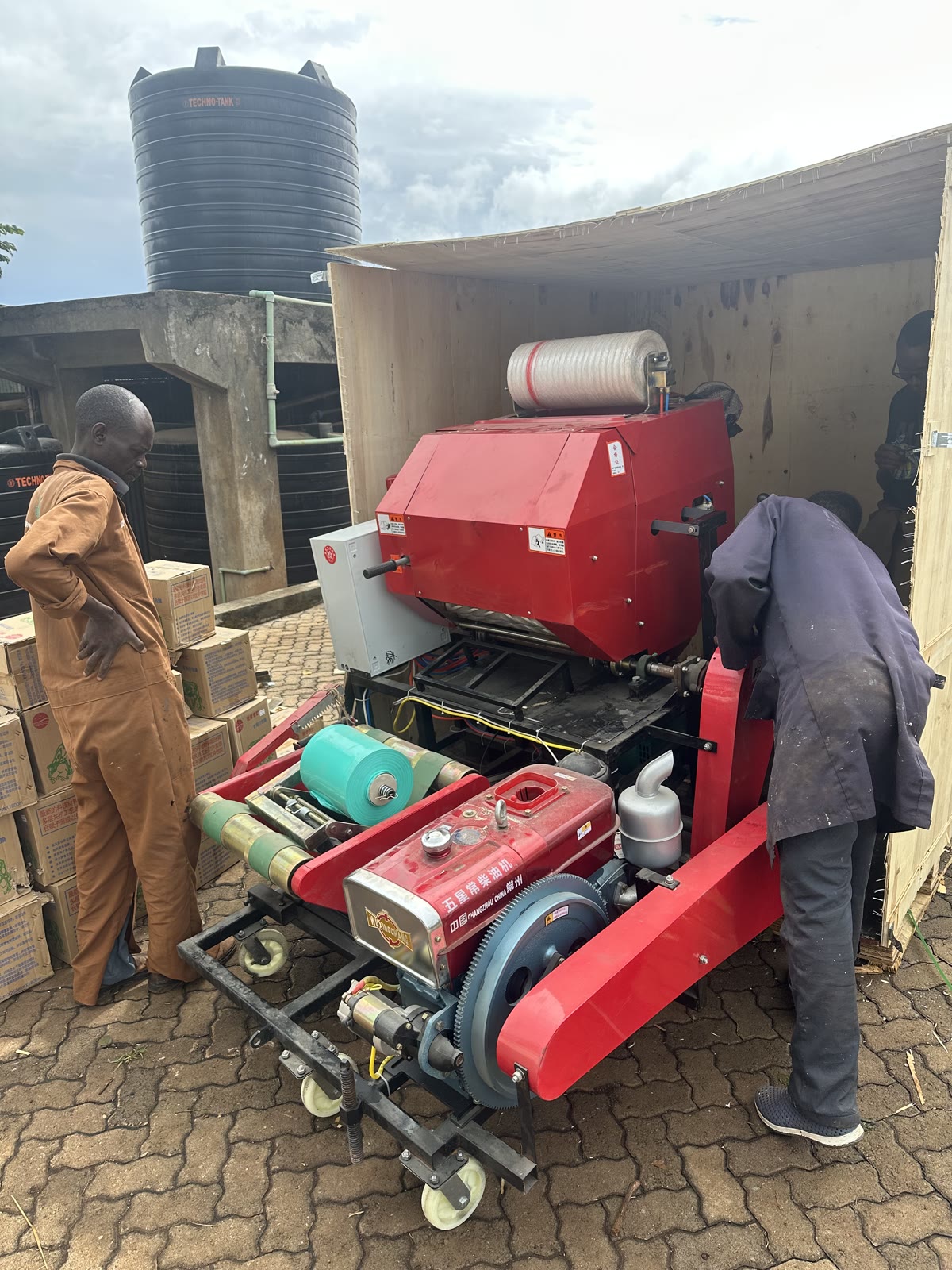
A new machine only earns its place after it works on the material waiting at the farm. At this Kiambu site, delivery day on 26 March 2025 began with a diesel silage baler wrapper inside a timber crate. By late afternoon, it had formed and film-wrapped a round bale from the farm's chopped forage.
The supplied photographs and videos document that change from arrival to handover. They show the machine being uncrated, the crew feeding it by hand, the bale transferring to the wrapping table, and the finished wrapped bales in the yard.
Test it with the material already on the farm
The team did not use a showroom sample. Chopped forage was spread beside the machine and fed by hand onto the conveyor. That matters because material condition and feeding technique affect how a bale forms; an on-site test shows what the machine does with the customer's actual feed.
The short feeding clip shows several people working together to keep the conveyor supplied while the diesel engine drives the baling chamber. It records the practical part of commissioning: placing the machine where it will work, bringing the material to it and establishing a steady feed.
From loose forage to a sealed bale
The longer test clip follows the working sequence. The conveyor carries chopped forage into the chamber. A compact round bale emerges, rolls onto the separate wrapping table and turns while green stretch film is drawn around it.
Several completed green-wrapped bales are already visible in the yard as the cycle continues. That supports a clear milestone: the machine was not merely delivered or switched on; it completed both baling and wrapping on the customer's site.
No measured throughput, bale weight or storage result was supplied with this media, so none is claimed here. The documented result is the successful on-site cycle itself.

A handover after the machine had worked
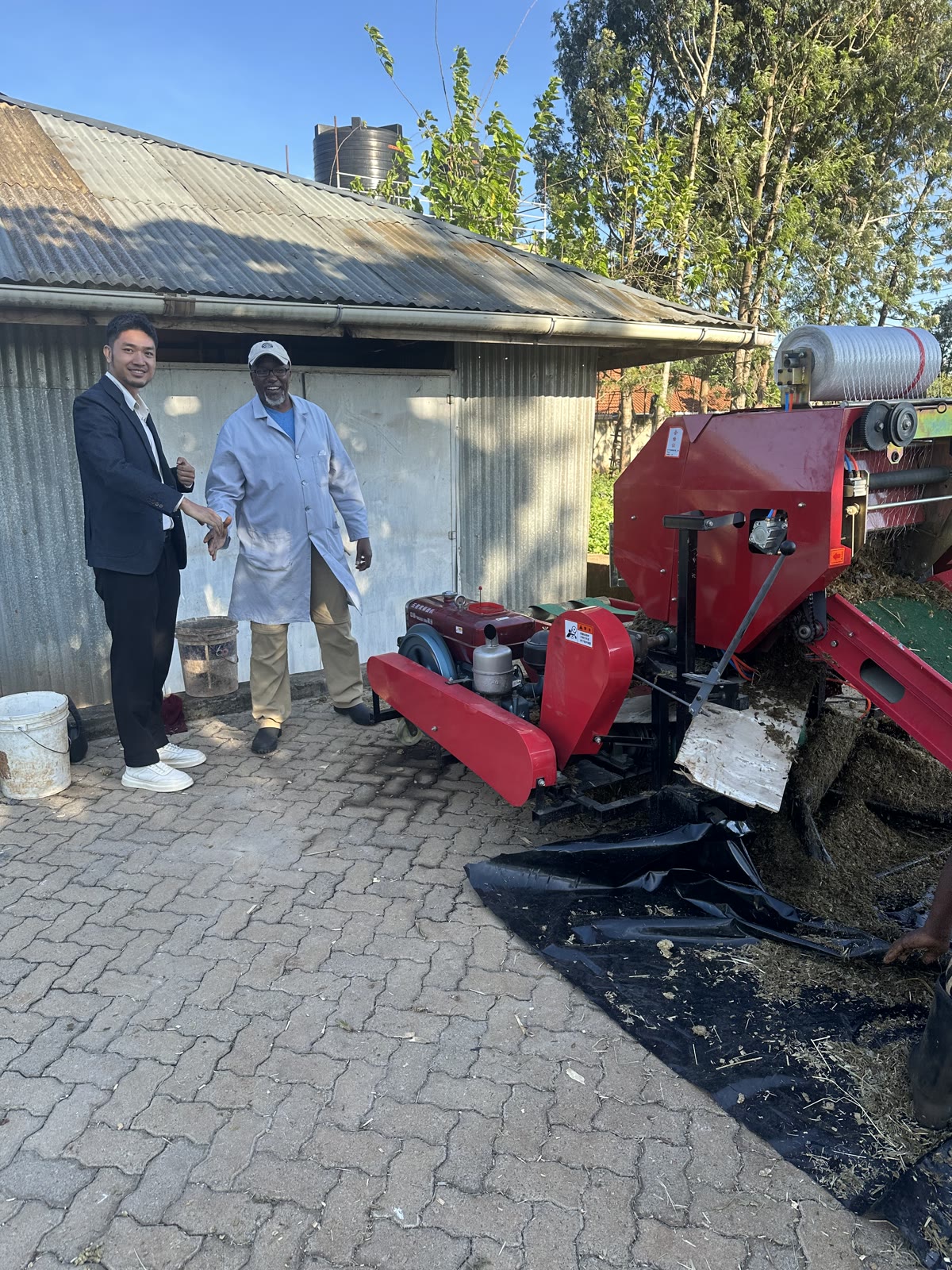
The final photographs were taken at the same site a few minutes after the long test clip. The machine is no longer clean from its crate: forage surrounds the working area, the conveyor carries the remains of the test and wrapped bales sit nearby.
That is the useful point at which to mark a handover. The customer has seen the machine operate on site and the delivery team has stayed through the complete cycle. The next evidence needed is longer-term: a customer comment, measured daily output and an update after the bales have been stored and opened.
The whole delivery in one view
The edited recap adds the parts that sit around the main test: the machine and rolls of film being loaded for transport, cattle at the destination, setup in the yard, the bale transfer and wrapping stage, and the final handover.
Together, the original clips, photographs and recap show a complete delivery-day record rather than a factory demonstration. The machine reached the place it was intended to work and processed the material prepared there.
The next useful update
The next version of this story should come from ordinary farm use: how the crew has settled into the workflow, how many bales they make in a normal day, and how the wrapped feed performs after storage. Those results will only be added when the customer provides them.
Discuss your silage operation
Tell LUCTORC what forage you preserve, the amount you handle, the power available at your site and how you plan to move the finished bales. We can match those requirements to a suitable machine and quote the delivery, film and commissioning needed to put it into service. See the silage baler range or contact LUCTORC.
See silage balers