
Country Kenya
From Chopping to Wrapping: Victor’s Next Step
With around 20 cows in Kinoo and a feed preservation business in Narok, Victor is taking the next step: wrapping his own feed. See the factory test video of his ordered silage baler wrapper.
More articles
-
 Charles’s 3.8T Chaff Cutter: From an Office Visit to On Its Way to Kenya16 October 2026 · Customer Stories · Kenya
-
 A Son’s Gift: A 5.8 t/h Chaff Cutter for His Father’s Farm in China15 October 2026 · Customer Stories · China
-
 Duncan’s Chaff Cutter: 10 t/h, Diesel, and Already Cutting14 October 2026 · Customer Stories · Kenya
Get a quotation
Tell us what you process, your daily volume and the power at your site. We reply with a suitable machine, its specification and a quotation.
Demander un devis Écrivez-nous sur WhatsApp 2000 Plaza, Mombasa Road, Nairobi
Monday to Friday, 10am to 5pm
Victor farms in Kinoo, Kiambu, and runs a feed preservation business in Narok. He already chops and prepares silage material for a living. His next machine — a diesel-powered LUCTORC silage baler wrapper — is being tested at the factory right now, tagged with his own name. Here is that test.

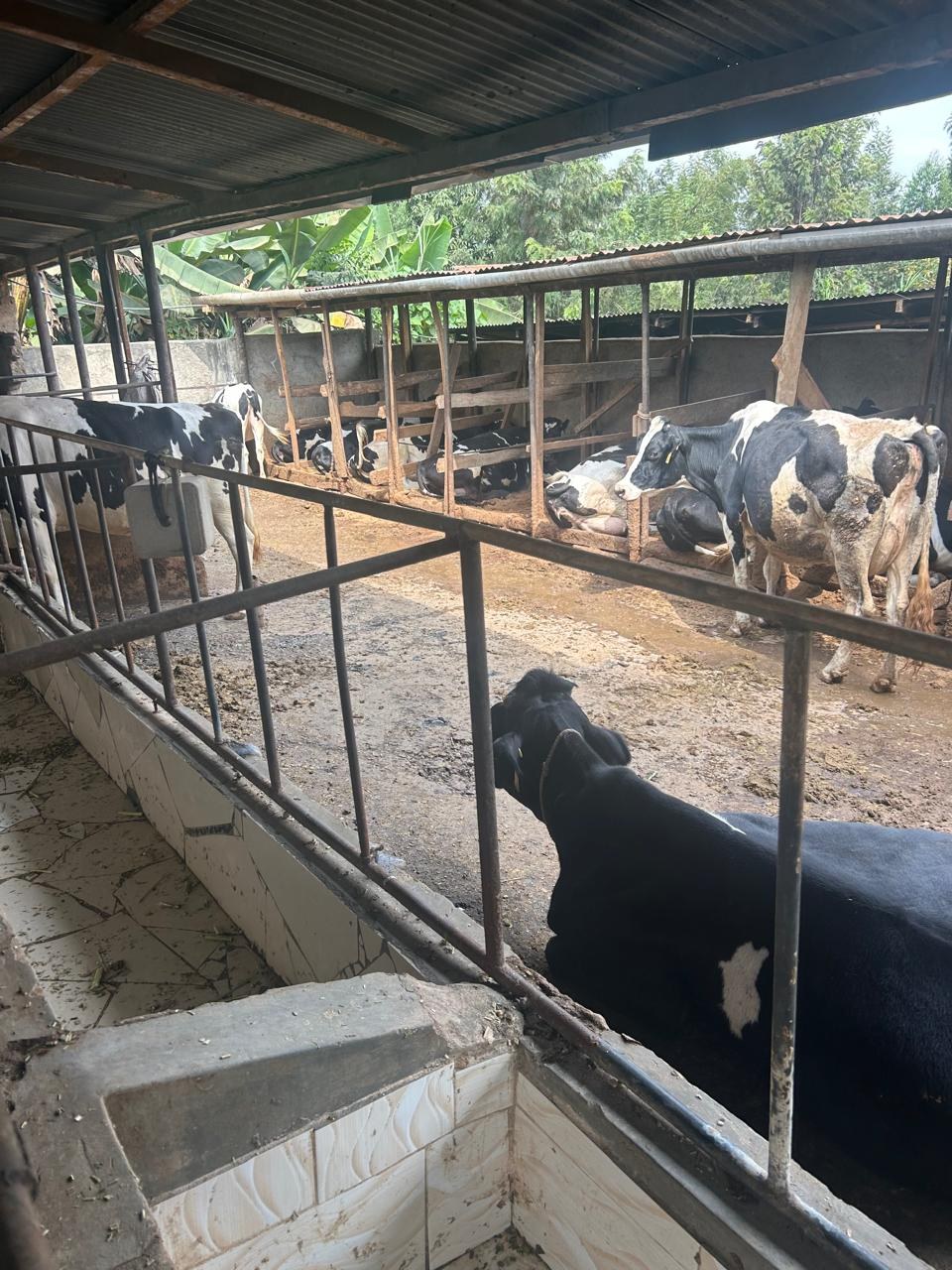
A working dairy farm in Kinoo
The cows are fed from mangers built along the length of a covered shed, morning and evening. It is a working farm rather than a showpiece — the kind of operation most of our customers in Kenya actually run, built up over time rather than set up for a photograph.
Chopped material that sits exposed to air starts losing quality immediately. Closing the gap between chopping and sealing is the whole point of owning the next machine.

Chopping feed is already part of the work
Before a baler ever enters the picture, the crop has to be chopped to a length that will pack and ferment properly. This is the stage Victor has already been running through his feed preservation business.
The next step: baling and wrapping his own feed
Victor's next move closes that gap: pressing the chopped material into bales and sealing them in film himself, rather than waiting on someone else's baler. He has ordered a diesel-powered LUCTORC silage baler wrapper. It is currently undergoing testing before dispatch.

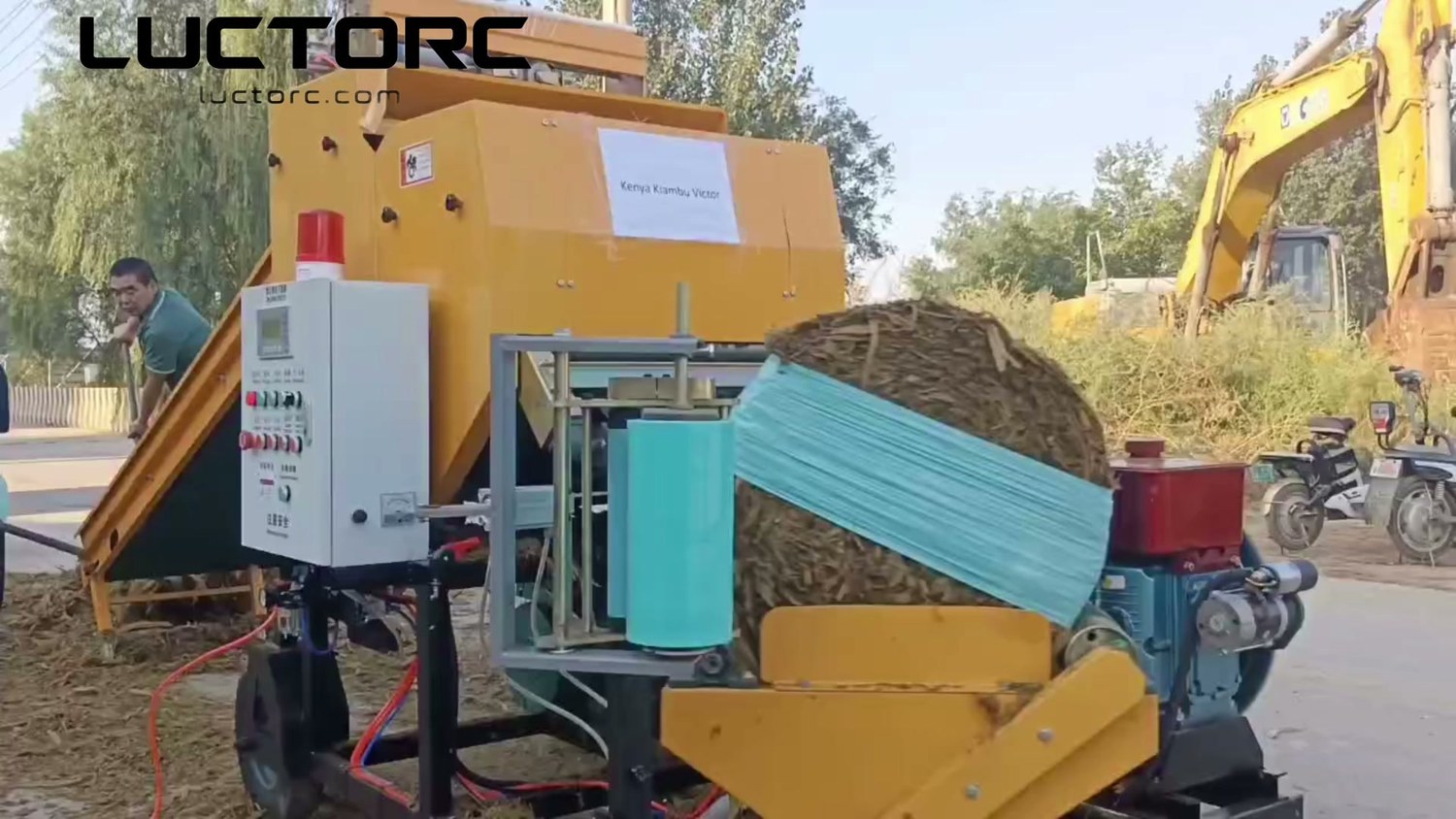
What the factory test shows
Before a machine ships, LUCTORC runs it through a working cycle at the factory — the video above. Victor's unit was tagged “Kenya Kiambu Victor” throughout, so there is no question which order it belongs to; the two stills here are from that same recording, the bale part-wrapped and further into the same pass.
This is a factory test filmed in China before shipping, not a farm trial — it shows the machine completing its cycle, not output figures under Kinoo conditions. What Victor gets out of it on his own farm, with his own chopped material, is the next chapter of this story.
What comes next
We are documenting Victor's journey as it actually happens. When his baler is dispatched and arrives in Kenya, and when he puts it to work on his own chopped feed, we will update this page with what happened — not a projection of what should happen.
Planning your own next step?
If you are preparing feed for your own animals or building a fodder business, tell us what you want to process, your expected daily volume and the power available at your site, and we can discuss a suitable machine and provide its specifications and a quotation — explore our silage baler range or contact LUCTORC, or visit us at 2000 Plaza, Mombasa Road, Nairobi, Monday to Friday, 10am to 5pm.
See the silage baler range